

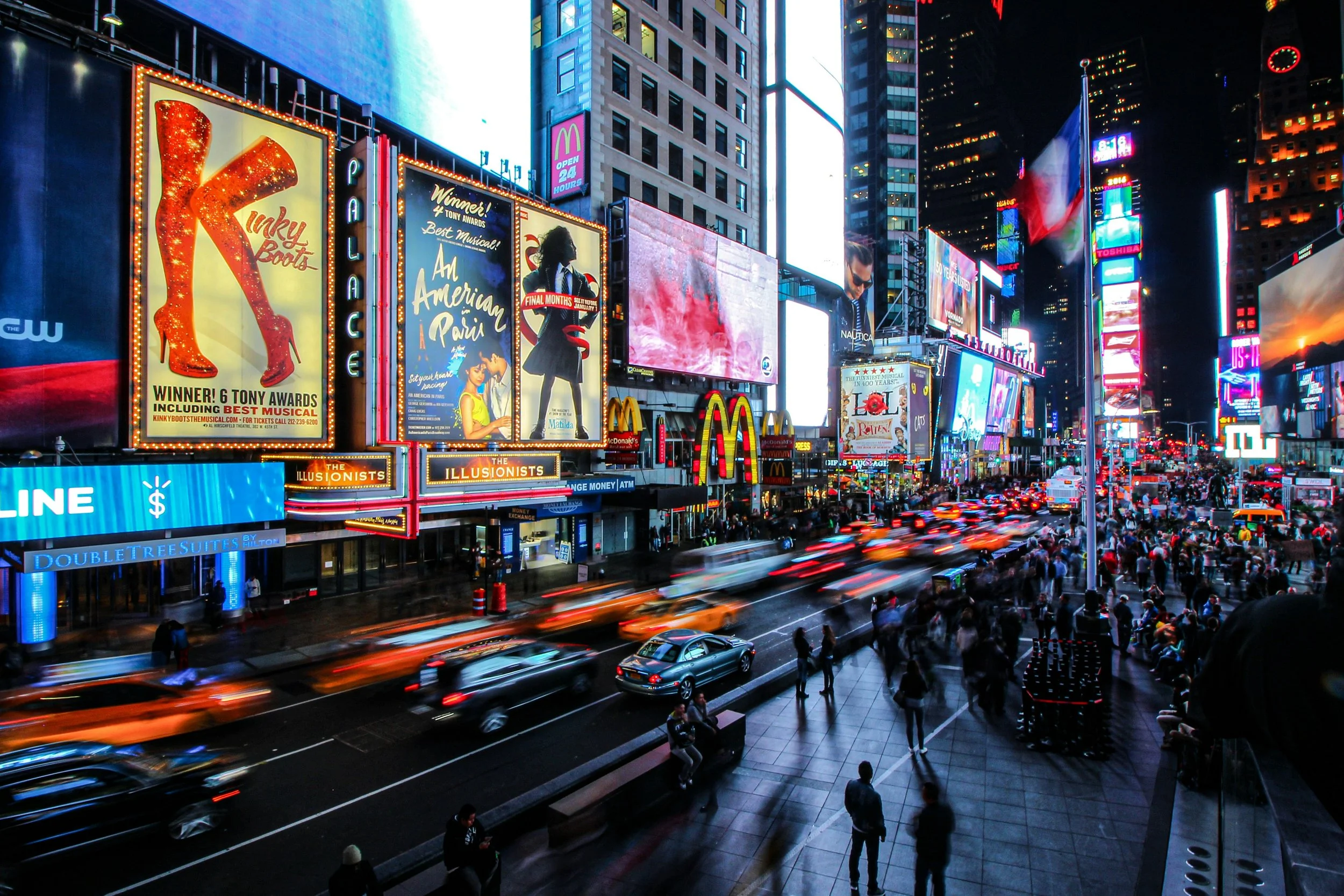
Photo by Florian Wehde on Unsplash
This month, we interviewed Rialto board member Richard Solomon. Rich is a long-time Westfield resident who spent over 40 years at CBS as the Senior Director of Production Management and the Ed Sullivan Theater Operations. During his time at CBS, he won three Emmys and led the team that designed, engineered, and restored the Ed Sullivan Theater into what it is today.
What is your connection to Westfield?
My wife and I lived in Manhattan as newlyweds, and we knew we wanted to raise a family in the suburbs. She’s from Long Island, and I’m from Brooklyn, so we joke, “How did we end up in Jersey?” We looked at ads in the New York Times and saw houses available in North Plainfield. One weekend, we took a ride out, and we liked what we saw. But as we were heading back to the city, we drove through Westfield on North Avenue, through downtown, past town hall and Mindowaskin park, and it was love at first sight. We must’ve looked at 30 houses—probably drove our real estate agent crazy. Eventually, we settled on one, and we’ve been in the same house ever since. Our kids went through the school system from K-12, and one of them just moved back to Westfield with a family of his own.
How’d you get involved in the Rialto?
I was on the Westfield Board of Education for nine years, and there I met Beth Cassie, President Emerita of the Rialto Board of Trustees. When I was working at the Ed Sullivan Theater, I met Bill Crandall, the current president of the Board of Trustees. He and I worked together on a performance celebrating the anniversary of the Beatles' coming to America. Later on, when Beth and Bill presented the chance to get involved at the Rialto, I couldn’t pass up the opportunity.
Can you tell us more about your time at CBS and the Ed Sullivan Theater?
I worked with CBS for over 40 years, from 1988 to 2022, as the Director of Production Management. In 1999, while Letterman was hosting, I joined the Ed Sullivan Theater operation. My role there consisted of everything from financial planning, managing studio technical operations, coordinating facilities, dealing with permits, negotiating deals, and overseeing client relationships.
In May of 2015, CBS announced that Stephen Colbert would be taking over Letterman in September 2015. Colbert wanted to refresh the theater and make it his own, so we had less than 6 months to renovate. The theater hadn’t been touched at all during Letterman’s run between 1993 and 2015. On the day of his last show on May 20, 2015, we started taking everything apart. We did a complete restoration of the theater and brought it back to its original 1927 design. We worked with the New York City Landmarks Preservation Commission to pull it off: removing and replacing every seat, integrating new facilities into the original building’s designs, renovating four floors of office space, revamping the marquee, and more. The theater was ready in time months before Colbert’s first show in the fall. It was a real accomplishment for the team.
With your experience at the Ed Sullivan Theater, how does it feel to be working with the Rialto?
The similarities are clear. Sometimes I have deja vu. In the case of both theaters, we’re taking a historic, meaningful landmark and revitalizing it into something new yet familiar. They both take a lot of hard work, coordination, and planning, but the result is incredibly rewarding, both for me personally and the community at large.
Do you have any favorite memories or stories from your career?
In July 2009, Paul McCartney was performing somewhere in New York City, and Letterman reached out asking if Paul would like to come on the show to perform. Paul said yes, but he wouldn’t perform on the Ed Sullivan Theater stage, or even on the roof, because he’d done that before. He wanted to do something new. The idea came up to have him perform on the marquee of the theater, and he was into it.
We had about 5 days to make it happen. I was in charge of logistics. We had a building from 1929 and no original architectural plans, so we didn’t know how the marquee was actually attached to the building or its structural integrity. We were planning to put a Beatle up there! Can you imagine the headline, “Paul McCartney dies in Ed Sullivan Theater marquee collapse”? The stakes were high. We worked with a structural engineering firm to fortify the marquee and collaborated with the mayor’s office to obtain the necessary permits. We pulled it off and ended up with a legendary 40-minute Paul McCartney concert on the marquee of the theater. It was a surreal experience.
You’ve got three Emmys. Two are for the Winter Olympics, 1994 and 1998. The third is for The Late Show with Stephen Colbert in 2020. How did that feel to win those? Where do you keep them?
The 1994 Olympics were incredibly fun, challenging, and rewarding. Being in Norway in the dead of winter and staying up til 3 or 4 in the morning for the daytime broadcast in the United States was something else. It was a lot of long, hard days. Despite working at two Olympics, I managed to see only one event live: the USA vs. Canada hockey game.
As for the Emmys themselves, I’ve got three of them, but one of them looks fake. Two are gold-dipped three times, as is the usual standard for the Emmys. The other was only dipped twice, from a year when the Emmys were trying to cut costs. So now I have two regular Emmys and one faded silver one. I have to keep them in separate locations because they look so silly together.
What’s your favorite memory of the Rialto?
My kids are grown adults now, 33 and 30. As kids, they both had birthday parties in that main party room of the Rialto. I don’t remember the movies we saw for those birthday parties, but I remember the feeling of being together and celebrating in the Rialto. When my wife and I first moved here, there were only one or two screens. Over the years, we’ve watched it grow and expand to a multiplex. Now we get to witness this new era of the Rialto.
What makes you excited about the Rialto? Why does Westfield need something like this?
What we’re doing here with the Rialto is unbelievable—not in a way where I can’t believe it’s happening, but in a wonderful way. The fact that the theater is where it is physically in our town, and the space it occupies in our culture, and who Westfield is—it’s huge. It outgrew its function as a movie theater for many reasons, and it had to become something else. There were a lot of things this place could’ve become: condos, stores, etc. The Rialto Center for Creativity will enhance the experience of Westfield. We’re doing something that is future-looking and respects what the Rialto originally was. It’s always been a central part of our town, and now it will continue to be.
About the Rialto Center for Creativity
The Rialto Center for Creativity is transforming Westfield’s historic Rialto Theater into a vibrant hub for cultural conversation, live performance, and hands-on learning.
The Rialto Center for Creativity is an independent, nonpartisan, nonprofit 501c(3) organization responsible for raising 100% of its construction and operating costs.
