

Meet the Volunteer: Alexander Antonelli Architect PLLC
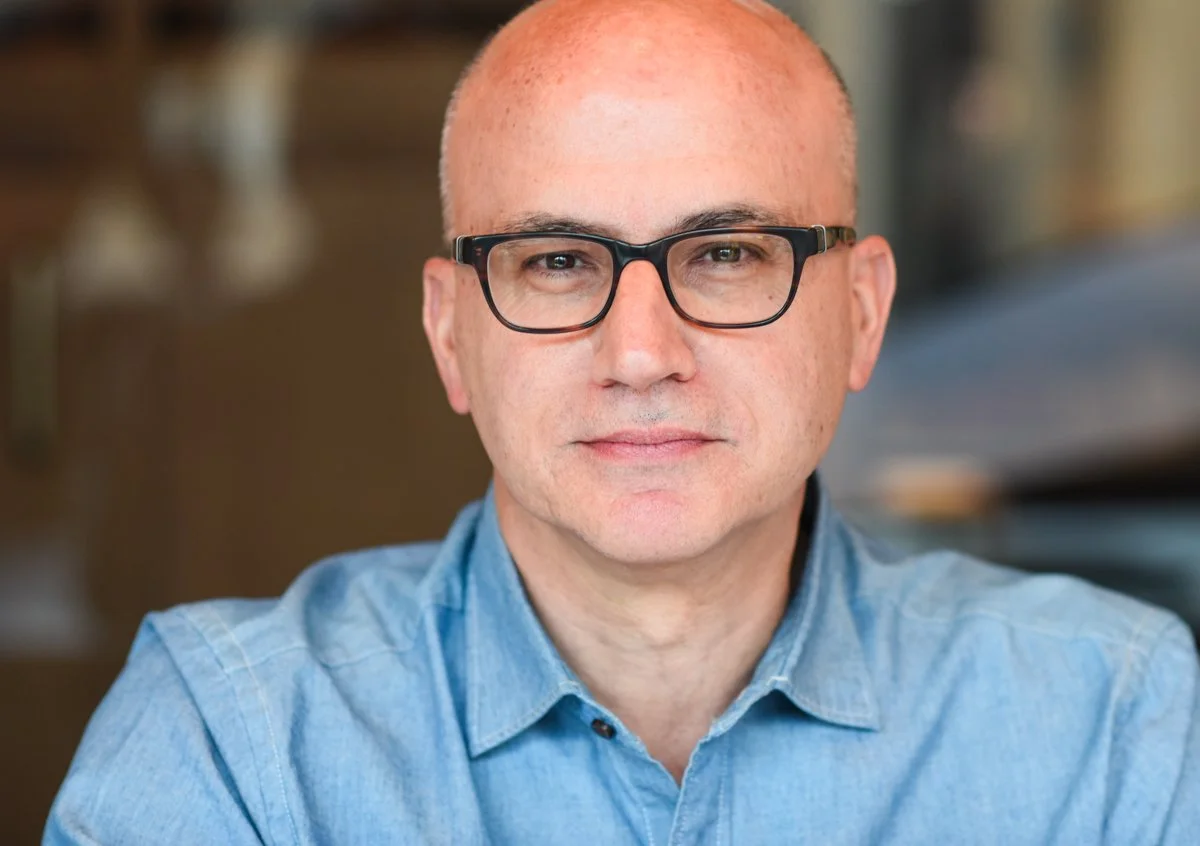
This month, we interviewed Building Committee member Alexander Antonelli. As a Westfield resident for nearly 25 years and a practicing architect, Alex brings both professional expertise and a personal connection to the historic Rialto Theater. Read our conversation to learn how he became involved with the project, how he works as a liaison between the board and the architectural team to honor the building’s past while designing for the future, and what he’s looking forward to when the Rialto Center for Creativity opens its doors in 2028.
What is your connection to Westfield, and how has living here shaped your perspective on this project?
My wife, Sandy, and I dated in high school and came to the movies at the Rialto, so I’ve had a connection to the building for quite some time. We moved back to Westfield in 1996. Sandy grew up in Clark but went to church in Westfield all her life, so she had a lot of friends here.
When we started our family, she realized we needed to come to a town that supported family life and had great schools. Because we both had an urban background, being in a town that had a vibrant history and a downtown was very important to both of us.
We bought a home a few blocks from Washington Elementary and St. Paul’s Church, and we’ve been here almost 25 years. It was built in 1908, and we did a full historic renovation. The main reason we’re in Westfield is the large community of historic homes and a downtown that has respected the town’s culture and architecture for several hundred years. As an architect and as people who appreciate deep roots, it felt like the right place for us.
How did you first get involved with the Rialto and the Building Committee?
I heard about the purchase from a private group and immediately sent them an email. I told them I was a local architect, working from home after moving my studio from New York City to Westfield, and that I had a strong interest in helping them reimagine the building. I joined the Building Committee about three years ago and have been helping create the vision for this incredible cultural center for downtown Westfield.
I did a presentation that took the integrity and authenticity of the original building, stripped away the later build-outs, and showed what the original shell of the building could look like. There’s a beautiful historic form there that had been turned into many different things over time. The materials and architectural features were important to save. I wasn’t talking about turning it into something it wasn’t.
My goal was to preserve a lot of the originality of the building while transforming it into a multi-use space.
How have you worked with M+S to honor the past while designing for the future?
Having run my own firm for many years, I understand how architectural teams work and how energy flows in a studio. There are clients, consultants, and engineers. A lot of moving parts.
Sometimes you need someone to slow things down and ask a question. Not because something is wrong, but because it’s important to step back and say, are we satisfied? Are we thinking about everything?
Because I’ve been on both sides, I can interpret the language between the architects and the Building Committee. It allows conversations to remain productive and part of the spirit of design and process.
From an architectural standpoint, what excites you most about the new design?
What’s become very clear over time is that we want the integration of the past and the future to be obvious.
We don’t want people to arrive at a completely redesigned Rialto and not have a memory or a connection to the building that was once there. Every decision we make, every room we create, is about that integration.
There may be new technologies and features that speak to today’s standards of construction and design, but you’re always going to know you’re in a historic building. It will always show respect and integrity for its past. At the same time, it won’t feel outdated. It will feel modern.
How do you see the Rialto Center for Creativity serving the community once it opens?
The main theater space is going to be so many things for our community. It’s a theater and a performance space for plays and music. The seats will retract, and the room can be rented for celebrations and community events. It will become like a town hall that’s open to everyone.
There will be dedicated studios for art, dance, and music, with an art gallery and a café/bar on the ground floor. We hope that this becomes one of the first true community living spaces where people can come together, not necessarily for an event, but just to gather.
We’ve tapped every aspect of the community we can think of. Young people learning the arts, adults socializing, local bands performing, the list goes on and on. The idea that all of these things can come together on the same campus is what will make this a hallmark for Westfield.
How will the Rialto evolve over time as community needs change?
We have a plan, but it’s a loose enough design that we can respond positively to the needs of the community.
For example, if fewer people are interested in pottery but everyone wants to learn to paint, we can adjust the studios. If there’s a drive for music production, for example, we could add a DJ booth in the bar and lounge area where students can learn their craft. I mean, where can you do that?
We’re going to open the doors for everyone and modify the program as we see fit and as demand increases.
When the doors open in 2028, what are you most looking forward to?
I have a dream that they’re going to close Broad Street and Central Avenue. There’s going to be the high school band, hundreds of adults & children from our community, a ribbon-cutting ceremony, spotlights aimed into the sky, speeches by our board president, all those involved with the creation of the project, and our mayor and his governing members. One of the greatest celebrations Westfield has ever had!
I see it as a seminal event for the community. We have not built anything in our town that is so culturally focused on community involvement. People love that, and we love that. And I think that’s what’s going to sustain us.
As a local musician, I also hope to perform at the new space during its opening days!
About the Rialto Center for Creativity
The Rialto Center for Creativity is transforming Westfield’s historic Rialto Theater into a vibrant hub for cultural conversation, live performances, and hands-on learning.
The Rialto Center for Creativity is an independent, nonpartisan, nonprofit 501(c )(3).