

Meet the Board Member: Asima Jansveld
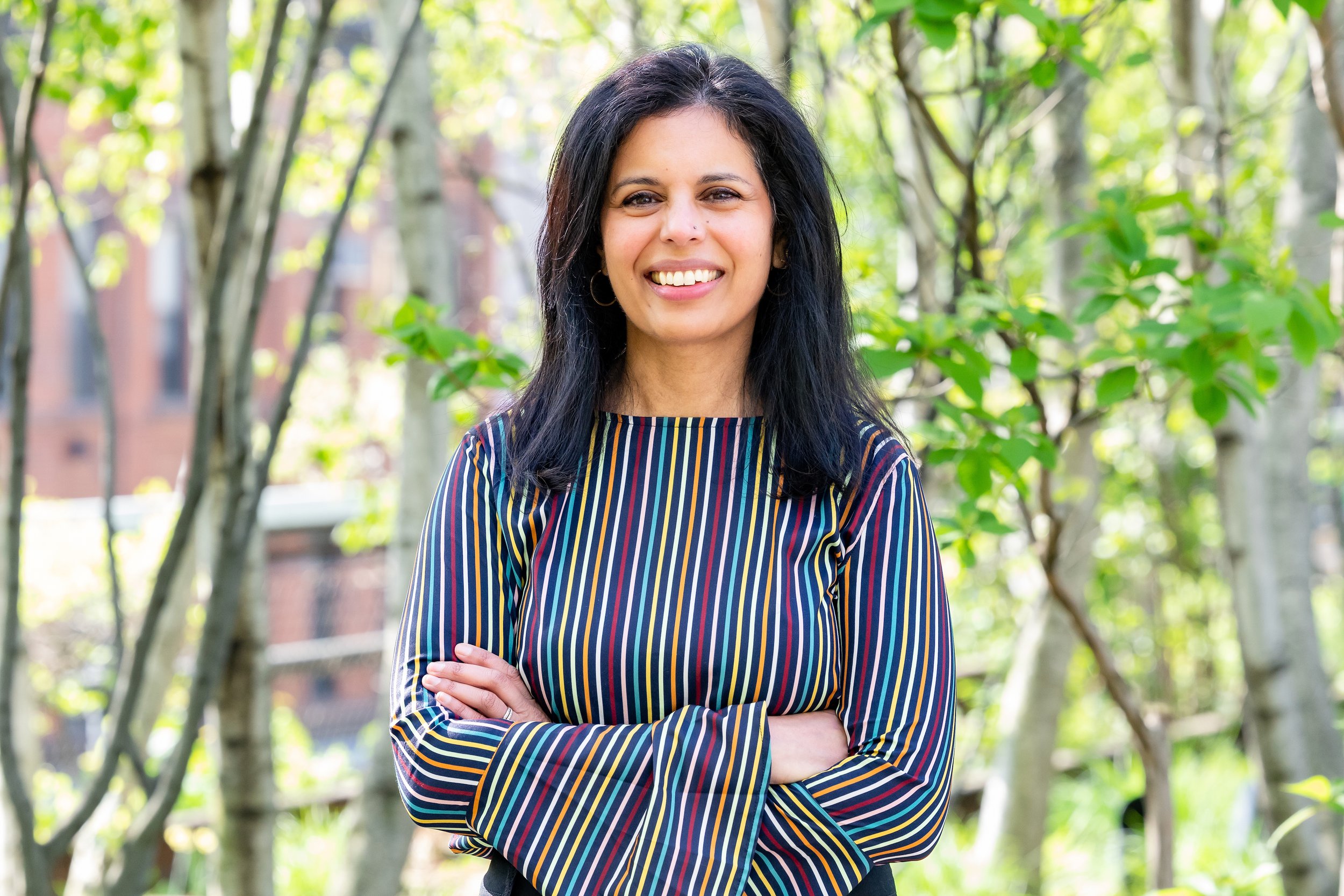
This month, we interviewed Rialto board member Asima Jansveld. Asima has decades of experience in urban planning, including economic development, public policy, and neighborhood revitalization. Read her interview to learn about the similarities between New York City’s High Line and the Rialto, her most interactive movie experience, and what she’s looking forward to when the Rialto reopens.
What is your connection to Westfield?
I've lived in Westfield for 16 years now and have two kids who went through the public school system—one is at WHS right now, and the other is a freshman in college. I moved here after living in New York City for 12 years.
How did you get involved in the Rialto?
I was on the Planning Board in town for four years, and when it was time to renew, I expressed interest in getting closer to arts and culture and urban planning, something I’m striving for in my career as well. I got in touch with the Rialto board and started talking with Kirti about the fundraising side of things before officially joining the board in the spring of 2025.
It’s come full circle. During a career transition a few years back, I worked with an executive coach to figure out my ultimate career aspiration. Together, we came up with this quote: “I lead with authenticity to foster cultures of well-being and wonderment in public spaces.” It felt like joining the Rialto fit that mantra perfectly.
Tell us a bit about your career.
I’m an urban planner by trade. I’ve spent my career working in different ways of impacting the public realm, mostly in New York City. I spent about 12 years after graduate school working for the New York City Economic Development Corporation, then moved to the Netherlands (my husband's Dutch) and worked for the European Urban Knowledge Network.
After coming back to the United States, I joined an economic development consulting firm, supporting government, nonprofit, and foundation clients on the social and the economic impacts of policy and urban planning decisions on communities and neighborhoods. Eventually I joined the High Line, where I first led the High Line Network, a North American peer learning network for people and organizations reusing infrastructure as public spaces (like the High Line). Later I became the Chief Program and Engagement Officer, so I oversaw the Network, public art, community engagement, education, and public programs.
Right now, I consult with the High Line and the Whitney Museum of American Art and West Side Cultural Network, which is a group of museums, parks, arts centers, and cultural institutions on the West Side of Manhattan who organize West Side Fest every summer.
After decades of working in revitalization projects, what are the most important things to keep in mind when redeveloping an existing space?
One of the main things to keep in mind is value capture, which asks questions like: How do you make sure the benefits of what you’re creating actually go to the people you want? How are you making sure that you’re benefitting your audience and not driving them out of a place?
Does the Rialto remind you of any other projects you worked on?
The High Line was founded by two strangers who lived in the neighborhood. They saw an article in The New YorkTimes that the High Line structure, a former elevated train line, would be demolished after decades of disuse, and they both thought “that’s a shame.” They showed up to a community board meeting, met each other, and decided to put their forces together. They weren’t urban planners or park guys. They just knew what the neighborhood needed. And in the end, they saved the High Line and created this iconic park in the sky.
There’s so much of that story in the Rialto. The Rialto project wasn’t top-down. Nobody told the community that this had to happen. It was born from community members who saw that it closed, lamented the loss of a historic resource in our community, and thought they could make something out of it.We’re not trying to convince the community to do something, we’re actually doing something that they have asked for.
What’s your favorite memory of the Rialto?
I remember going to see Rocky Horror Picture Show during AddamsFest. It was such a fun way to watch a movie. Seeing a movie is so often passive, but Rocky Horror is the opposite. It’s such a fun way to involve the audience—getting dressed up, interacting with the actors. It was a completely unique experience.
My other favorite memory is a little more recent, actually from our first Spotlight Series event. It was amazing to welcome people, help them understand the vision for this project, see their reactions, and watch people get inspired. I thought it was really special to see the space be used again in this new way.
What are you most excited about for the Rialto?
In this digital age, there are so many people who are getting further and further away from their own kind of creativity. Having a space where people are invited to connect in so many different ways and over different mediums is important, but we just don't have that right now.
Right now, it feels like you have to choose which type of creativity you want to pursue, then go to that specific place. The idea of a spot where all these different types of creativity can come together is amazing. It provides the chance to experiment, be inspired, and pursue different paths.
Creativity is such a fundamental part of my life—I just learned a new sewing technique this morning. I'm enrolled in an art class. I look forward to not just supporting creativity in younger generations, but also having a place right in town that I can walk to if—and when—I want to do something creative.
About the Rialto Center for Creativity
The Rialto Center for Creativity is transforming Westfield’s historic Rialto Theater into a vibrant hub for cultural conversation, live performances, and hands-on learning.
The Rialto Center for Creativity is an independent, nonpartisan, nonprofit 501(c )(3).