

Creativity: Not Just Child’s Play
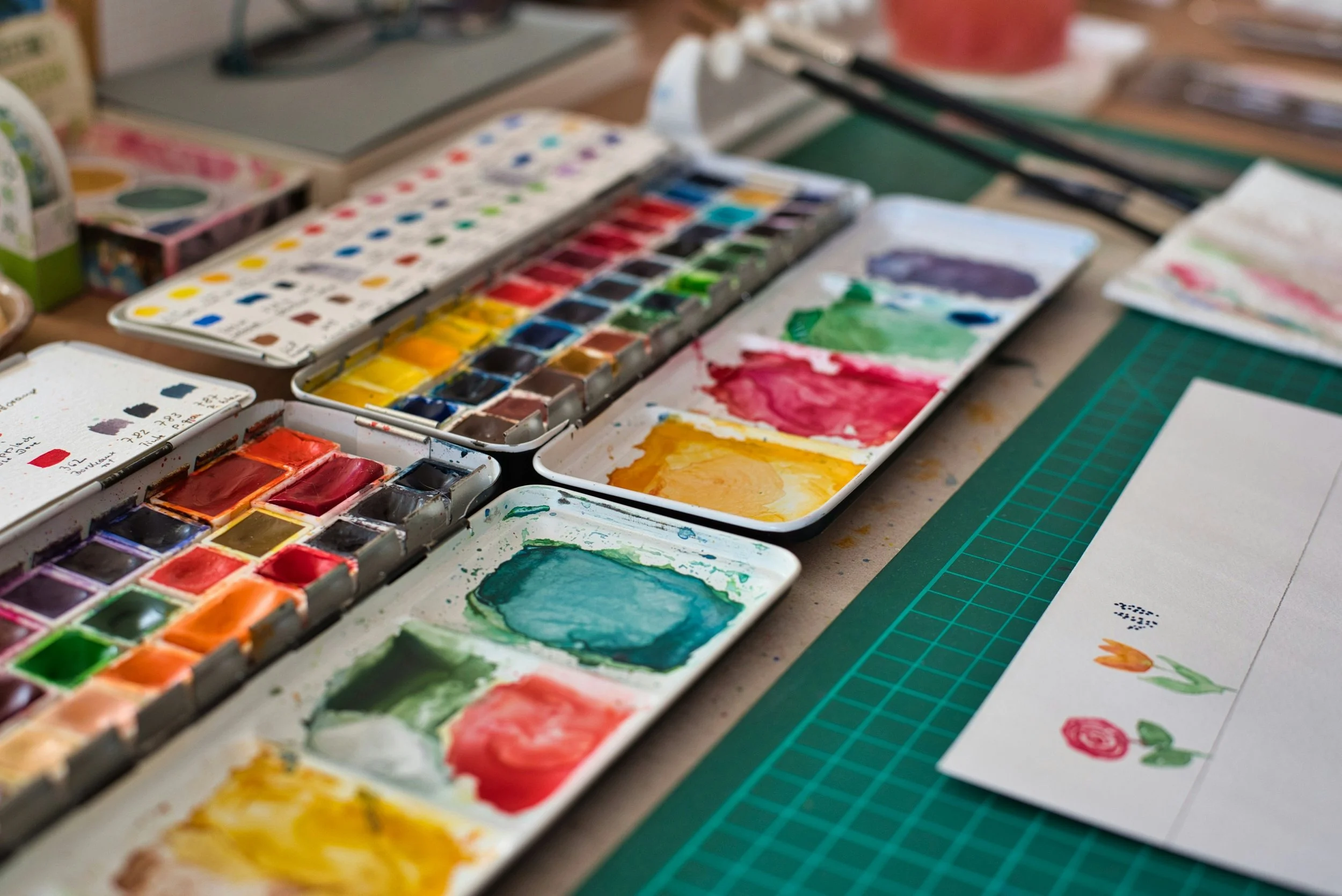
Photo by REGINE THOLEN on Unsplash
Parents have long debated the best ways for children to spend their time. Economists, child psychologists, child development specialists, and sociologists increasingly agree that creativity deserves a place in every child’s life.
Research shows that being creative benefits kids in unexpected ways, and children who are able to be creative achieve more success in childhood, adolescence, and adulthood.
Confidence & Self-Esteem
Creativity helps build confidence and self-esteem. These attributes are more than just feeling good about yourself; they’re the foundation for how kids navigate the world. When children have high levels of confidence and self-esteem, they are better able to face challenges head-on, try new things, persist when something goes awry, and even do things that they might not enjoy or do well naturally. Confidence and self-esteem create perseverance and grit.
There are a few theories on how creativity improves self-esteem and confidence. One thought is that being creative validates individual uniqueness, providing a feeling of accomplishment, empowerment, and self-worth. When kids can successfully express themselves and pursue a creative project, it strengthens their sense of individuality and personhood. Another theory suggests that creativity strengthens social resilience, enabling children to resolve interpersonal issues and build trust in themselves and their abilities.
When you ask children directly, they’ll tell you that creativity makes them feel more confident. When Crayola asked children how creativity makes them feel, 92% of the 6 to 12-year-olds surveyed said that being creative boosts their confidence, and 59% said that participating in a creative activity gives them a sense of pride.
Academic Performance
Academic performance is more than just a measure of how children are learning and thinking in school—it can be the stepping stone to higher education opportunities and job prospects. Creativity is a strong predictor of academic success across all subject areas. Researchers in Australia found that creativity is a better indicator of educational outcomes than traditional predictors like GPAs. In 2015, the College Board found that students who took four years of arts and music classes scored higher on the SAT. When Dutch economists examined the impact of being in a more creative peer group, they found that kids in such groups earned higher GPAs. (Yes, creativity is so powerful that simply being around creative peers results in higher academic achievement.)
What drives this phenomenon? Creativity increases memory retention, develops focus, and improves problem-solving skills. By nature, creativity requires thinking outside the box and finding unconventional or indirect ways to approach a task. These skills translate directly to the classroom, making it easier for children to think critically and solve problems.
Professional Outcomes
All careers, from doctors to electricians to teachers and everyone in between, require a few things to be successful: problem-solving, developing novel ideas, adapting to new situations, and facing uncertainty. What underpins all of these skills? Creativity.
IBM conducted a survey of more than 1,500 Chief Executive Officers from various industries worldwide to assess which traits are most important to them and their business. Creativity beat out rigor, discipline, integrity, and vision. But creativity is not just something high-level executives look for when hiring; it also leads to more secure, higher-paying jobs.
According to a Purdue University study, creativity is a predictor of career earnings and employment rates. Creatives tended to have better professional outcomes, especially in managerial and technical roles. Why? Researchers theorize that creative individuals have a suite of skills that help them thrive in specific work environments. Creative thinking requires a combination of conceptual and analogical reasoning, which relies on applying existing, experience-based knowledge to new situations or ideas. Put simply, strong creativity skills allow people to adapt to unfamiliar situations and approach challenges head-on.
Looking Ahead
When parents, caregivers, coaches, and educators wonder how to set kids up for success, the answer may be more straightforward than it seems: provide children and teens with the chance to be creative. Whether it’s at home, in the classroom, in the computer lab, on the field, backstage, or soon at a dedicated space for creativity like the Rialto, each opportunity is a chance to build kids’ confidence, critical thinking, expression, and more. By emphasizing curiosity, encouraging independent exploration, and creating opportunities for hands-on experimentation, children strengthen their creativity, develop cognitive skills, and build confidence that sets them up for a lifetime of success.
About the Rialto Center for Creativity
The Rialto Center for Creativity is transforming Westfield’s historic Rialto Theater into a vibrant hub for cultural conversation, live performances, and hands-on learning.
The Rialto Center for Creativity is an independent, nonpartisan, nonprofit 501(c )(3).